
Currently Empty: ₹0.00
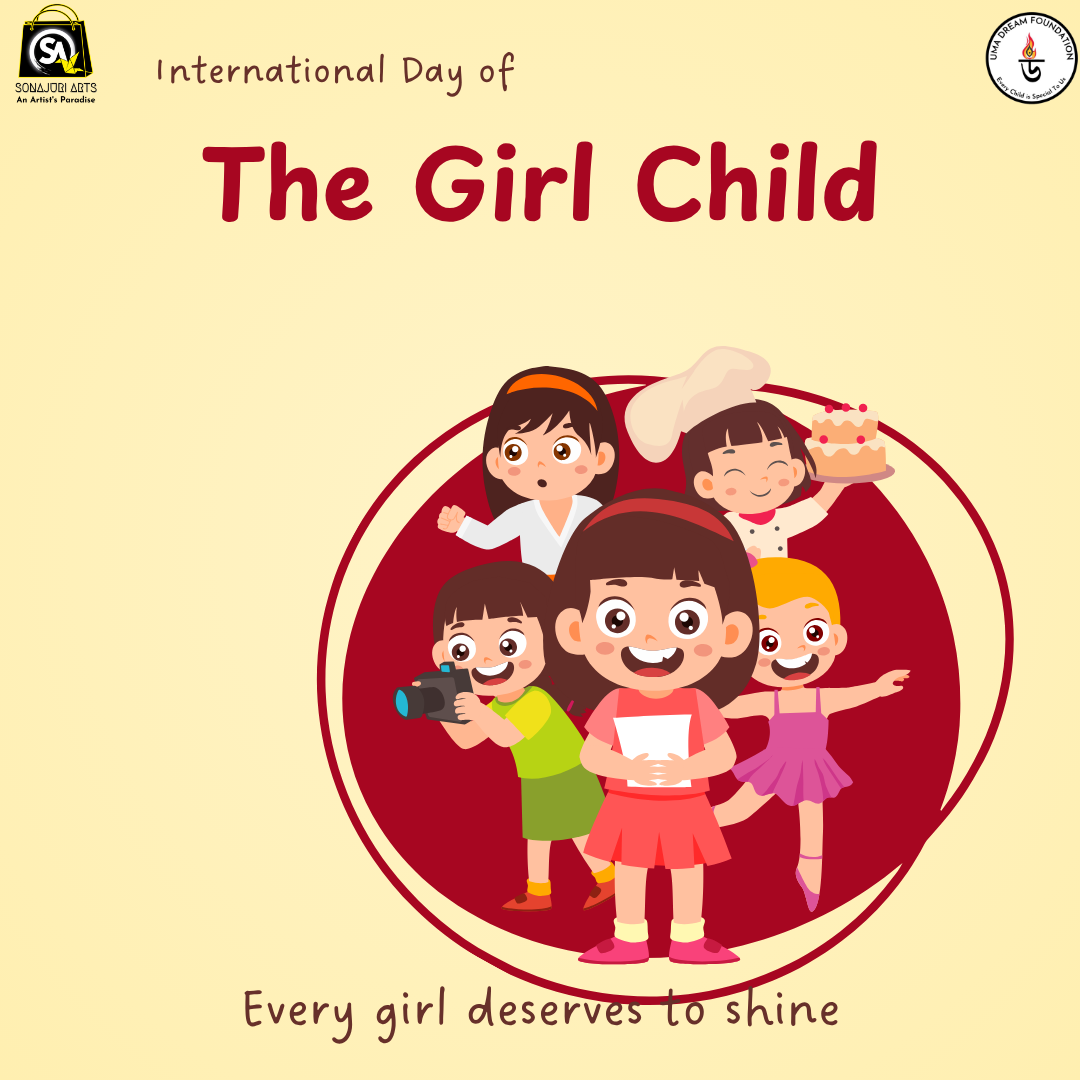
Educate a Girl, Empower a Nation: Why Girl Child Education Matters
Education is one of the most powerful forces capable of transforming an individual, a family, a community, and ultimately an entire nation. Yet, despite remarkable progress in access to education, millions of girls around the world still face barriers that prevent them from receiving the education they deserve. Poverty, social expectations, child marriage, household responsibilities, lack of safe schools, inadequate sanitation facilities, discrimination, and limited access to technology continue to affect girls disproportionately.
The education of a girl is not simply about helping one child complete school. It is an investment in a future that extends far beyond the classroom. When a girl receives quality education, she gains knowledge, confidence, skills, independence, and the ability to make informed decisions about her life. She becomes better equipped to participate in the economy, contribute to her community, raise healthier and better-educated children, and become a leader in her own right.
This is why the simple idea of “Educate a Girl, Empower a Nation” carries such profound meaning. A girl who receives education today can become the woman who educates the next generation tomorrow. Her education creates a ripple effect that can continue across generations.
Education Is Every Girl’s Right
Education should never be considered a privilege reserved for children from financially secure families. Every girl, regardless of her economic background, geographical location, social circumstances, or family status, deserves access to quality education.
A classroom can be much more than a place where a child learns mathematics, science, languages, or history. For a girl, it can be a place where she discovers her abilities, develops confidence, forms friendships, learns about her rights, and begins imagining a future beyond the limitations imposed by poverty or social expectations.
Education gives girls the ability to understand the world around them. It teaches them to question unfair practices, recognize opportunities, communicate effectively, solve problems, and make informed decisions.
When a girl is denied education, society does not merely lose a student. It potentially loses a teacher, doctor, engineer, entrepreneur, researcher, artist, administrator, social worker, leader, or changemaker.
Therefore, ensuring that girls remain in school is not only an educational responsibility. It is a social and national responsibility.
The Connection Between Girl Child Education and Empowerment
True empowerment begins when individuals have the knowledge and confidence to make choices about their own lives.
Education provides girls with both.
An educated girl is more likely to understand the importance of health, financial planning, legal rights, personal safety, and professional opportunities. She is better positioned to communicate her aspirations and participate in decisions affecting her future.
Education also helps develop self-esteem. A girl who learns, succeeds academically, participates in activities, and receives encouragement begins to recognize her own potential.
This transformation can be profound.
A girl who once believed that her circumstances determined her future may begin thinking differently. She may start asking, “What can I become?” rather than “What am I allowed to become?”
That change in mindset is one of education’s greatest contributions to empowerment.
Breaking the Cycle of Poverty
Poverty is one of the most significant barriers to girls’ education. Families struggling to meet basic needs may find it difficult to pay school expenses, transportation costs, uniforms, books, or other educational expenses.
In some households, girls may also be expected to work at home, care for younger siblings, or contribute to family income instead of attending school.
This can create a cycle.
Limited education can lead to limited employment opportunities. Limited employment opportunities can contribute to financial insecurity. Financial insecurity can then affect the education of the next generation.
Educating girls can help break this cycle.
A girl who receives quality education has greater opportunities to acquire skills and participate in the workforce. As she becomes economically independent, she can contribute to her family’s financial stability and invest in the education and wellbeing of her children.
The benefits therefore extend beyond one individual.
Supporting a girl’s education today can contribute to a stronger household tomorrow.
Educated Mothers Build Stronger Families
One of the most powerful effects of educating girls becomes visible when they become mothers.
An educated mother is often better equipped to understand the importance of nutrition, hygiene, healthcare, vaccination, emotional wellbeing, and education. She can support her children’s learning and encourage them to remain in school.
This creates an intergenerational effect.
A girl who receives education can become a mother who values education. Her children are then more likely to grow up in an environment where learning is encouraged.
In this way, educating one girl can influence an entire family for decades.
This is why investments in girls’ education should not be viewed only through the lens of individual achievement. They should be understood as investments in future generations.
Education and Gender Equality
Gender equality cannot be achieved without equal access to education.
When girls and boys receive equal opportunities to learn, develop skills, participate in activities, and pursue careers, society becomes more inclusive.
Education challenges stereotypes that restrict girls to traditional roles.
A girl should be able to imagine herself as a scientist, pilot, entrepreneur, soldier, teacher, lawyer, artist, engineer, administrator, athlete, or leader.
There is nothing wrong with choosing a traditional role if it is a genuine choice. The problem arises when social expectations remove the possibility of choice.
Education expands that possibility.
It gives girls the ability to decide what kind of life they want to build.
The Problem of Child Marriage
Child marriage remains a major obstacle to girls’ education in many parts of the world.
When a girl is married at a young age, her education often comes to an end. Household responsibilities, pregnancy, childcare, and social expectations can make it extremely difficult for her to return to school.
Education can play an important role in changing this reality.
Keeping girls in school can help them develop aspirations and understand the long-term consequences of early marriage. Families who see their daughters progressing academically may also become more supportive of delaying marriage and encouraging further education.
Education does not solve every social problem by itself, but it can provide girls and families with knowledge, confidence, and opportunities that make harmful practices easier to challenge.
Education Creates Economic Opportunities
The modern economy increasingly rewards knowledge, skills, creativity, communication, and technological ability.
If girls are excluded from education, nations lose a significant portion of their potential workforce.
Educated women can contribute to almost every sector of an economy. They can work as professionals, start businesses, create employment, conduct research, provide essential services, and participate in leadership.
Entrepreneurship is particularly important.
A girl who receives education may eventually become a business owner who not only earns an income but also creates employment for others.
This demonstrates why girl child education should be viewed as an economic investment rather than merely a social welfare initiative.
A nation cannot achieve its full economic potential if a large part of its population is unable to develop and use its talents.
The Digital Divide and Girls’ Education
Technology has transformed education, but it has also created a new challenge: the digital divide.
Access to smartphones, computers, reliable internet connections, digital learning platforms, and other educational technologies can significantly influence a student’s learning opportunities.
Girls from disadvantaged households may have less access to digital devices or may be given lower priority when household devices are shared.
This can create another layer of inequality.
Digital literacy should therefore become an important part of girls’ education.
Girls should not only be consumers of technology. They should also learn how technology works and how they can use it to create, communicate, innovate, and build careers.
From coding and digital marketing to online entrepreneurship and remote work, technology can open doors that were previously unavailable to many young women.
Safe and Supportive Schools Matter
Simply building schools is not enough.
Girls need safe, welcoming, and supportive learning environments.
Schools should provide appropriate sanitation facilities, clean drinking water, safe transportation where necessary, trained teachers, and systems that protect students from harassment and discrimination.
A girl should be able to travel to school and study without fear.
Teachers also play a critical role.
A supportive teacher can change the direction of a student’s life. Encouragement from a teacher can give a girl the confidence to participate, ask questions, pursue higher education, and believe in her abilities.
Schools therefore have a responsibility not only to educate girls academically but also to create an environment where they feel respected and valued.
The Role of Parents and Families
Government policies and schools alone cannot guarantee girls’ education.
Families play an equally important role.
Parents are often the first people who shape a child’s understanding of what is possible. When parents encourage their daughters to study, pursue careers, participate in activities, and express their opinions, they help build confidence.
Families should treat the education of daughters and sons as equally important.
A daughter’s education should not be sacrificed simply because financial resources are limited.
Even when circumstances are difficult, communities can explore scholarships, government support, charitable assistance, community education programs, and other resources to help girls remain in school.
The message should be clear:
A daughter’s education is not an expense. It is an investment.
The Role of Government
Governments have a crucial role in making education accessible, affordable, and safe.
Policies that provide scholarships, financial assistance, free educational materials, school meals, transportation, sanitation facilities, digital resources, and support for disadvantaged families can help reduce barriers.
However, implementation is just as important as policy.
A program may exist on paper, but its success depends on whether the intended beneficiaries can actually access it.
Governments must therefore work closely with schools, local communities, teachers, parents, civil society organizations, and non-governmental organizations to identify girls who are at risk of dropping out and provide appropriate support.
The Role of NGOs and Civil Society
Non-governmental organizations and community groups can play an important role in reaching children who may otherwise remain outside the education system.
They can provide scholarships, learning materials, mentoring, tutoring, digital resources, awareness programs, vocational training, and family support.
More importantly, NGOs can often work directly with communities and understand local challenges.
For organizations committed to education and social development, supporting a girl should mean more than paying her school fees. It can mean helping her remain motivated, providing learning support, encouraging her ambitions, and helping her family understand the long-term value of education.
Every child deserves someone who believes in her potential.
Education and Leadership
Leadership begins long before someone receives a title.
It begins with confidence, responsibility, communication, decision-making, empathy, and the ability to solve problems.
Education helps develop these qualities.
An educated girl can become a leader in her classroom, family, workplace, community, or country.
Women leaders bring diverse experiences and perspectives to decision-making. When women participate meaningfully in leadership, policies and institutions can become more representative of society.
Therefore, educating girls today is also about preparing the leaders of tomorrow.
The girl sitting quietly in a classroom may one day become the person responsible for making decisions that affect thousands or even millions of people.
Education Builds Confidence and Voice
Perhaps one of the most important benefits of education is that it gives girls a voice.
Knowledge allows a person to understand choices. Communication skills allow them to express those choices. Confidence allows them to stand by them.
A girl who learns to speak, question, debate, write, research, and think critically becomes better prepared to participate in society.
She can speak about injustice. She can seek help when necessary. She can negotiate opportunities. She can participate in community decisions.
Education transforms silence into participation.
The Importance of Role Models
Young girls need to see women succeeding in different fields.
Role models help children understand that success can take many forms.
A girl who sees a woman scientist may begin imagining herself as a scientist. A girl who sees a woman entrepreneur may consider starting a business. A girl who sees a woman military officer, doctor, teacher, artist, engineer, or administrator may realize that professional ambition is possible.
Role models do not have to be famous.
A local teacher, doctor, entrepreneur, social worker, or community leader can be equally inspiring.
Every successful woman has the potential to inspire another girl.
What Society Can Do
Creating a future where every girl receives education requires collective action.
Parents can encourage daughters to study.
Teachers can identify and support students at risk of dropping out.
Communities can challenge harmful stereotypes.
Governments can strengthen educational infrastructure and financial support.
Businesses can support scholarships and skill-development programs.
NGOs can reach disadvantaged children.
Individuals can contribute time, resources, mentorship, or awareness.
Even a small contribution can make a difference.
Providing one child with books, paying school expenses, mentoring a student, donating a digital device, or supporting a scholarship can become part of a much larger transformation.
Education Must Continue Beyond School
While school education is fundamental, empowerment should not end with graduation.
Girls should have opportunities for higher education, vocational training, professional development, entrepreneurship, digital skills, financial literacy, and lifelong learning.
The world of work is changing rapidly. New technologies and economic models are creating new opportunities while also demanding new skills.
Girls must be prepared not only to enter this changing world but to shape it.
Education should therefore focus on critical thinking, creativity, communication, collaboration, problem-solving, digital literacy, financial awareness, and leadership alongside academic knowledge.
From Beneficiaries to Changemakers
There is a tendency to view disadvantaged girls only as beneficiaries of charity.
That perspective needs to change.
A girl receiving educational support today is not simply someone who needs help. She is a potential teacher, professional, entrepreneur, leader, parent, innovator, and community builder.
Support should therefore be designed to unlock potential rather than create dependence.
The goal should be to help girls become capable of building their own futures.
When that happens, the impact of educational support multiplies.
A Nation Cannot Progress by Leaving Its Girls Behind
The development of a nation depends on the development of all its citizens.
A country cannot fully realize its economic, social, cultural, and intellectual potential if millions of girls are unable to access education.
Every girl excluded from education represents lost potential.
Every girl who completes school represents a new possibility.
Every girl who enters higher education represents another step toward a more skilled society.
Every girl who becomes economically independent strengthens her family.
Every educated mother can influence the next generation.
And every educated woman who becomes a leader can inspire thousands more.
This is why girl child education is not a narrow social issue. It is a national development issue.
The Future Begins in the Classroom
Imagine a classroom where every girl is encouraged to dream.
She has books in her hands, a teacher who believes in her, parents who support her, and a safe environment where she can learn without fear.
She is not told that her dreams are too ambitious because she is a girl.
Instead, she is asked:
“What do you want to become?”
That question can change a life.
Perhaps she wants to become a doctor.
Perhaps an engineer.
Perhaps a teacher.
Perhaps an entrepreneur.
Perhaps an artist.
Perhaps a scientist.
Perhaps she wants to create something that does not yet exist.
Whatever her dream may be, education gives her the foundation to pursue it.
Conclusion: Educate a Girl, Empower a Nation
Girl child education is one of the most meaningful investments society can make.
It empowers individuals, strengthens families, reduces poverty, promotes gender equality, improves economic participation, supports healthier communities, and prepares future generations for a better world.
But beyond statistics and economic arguments is something even more important: every girl has the right to discover her potential.
She deserves the opportunity to learn.
She deserves the freedom to dream.
She deserves the confidence to speak.
She deserves the skills to build an independent future.
And she deserves a society that believes her education matters.
When we educate a girl, we do more than place a child in a classroom. We open a door to possibility. We give her knowledge that cannot easily be taken away, confidence that can grow throughout her life, and opportunities that can change the future of her family.
Her success can inspire her siblings.
Her achievements can strengthen her family.
Her independence can inspire her community.
Her leadership can influence her nation.
And her children can inherit a culture that values education.
That is the true power of educating a girl.
Educate a girl, and you empower an individual.
Empower an individual, and you strengthen a family.
Strengthen families, and you transform communities.
Transform communities, and you build a stronger nation.
The future of every nation depends on the opportunities we give its children today. Let us ensure that no girl is left behind because of poverty, discrimination, tradition, or circumstance.
Let us give every girl the education she deserves.
Because when a girl learns, she does not learn only for herself.
She learns for her family, her community, her future—and for the nation she has the power to help build.
